

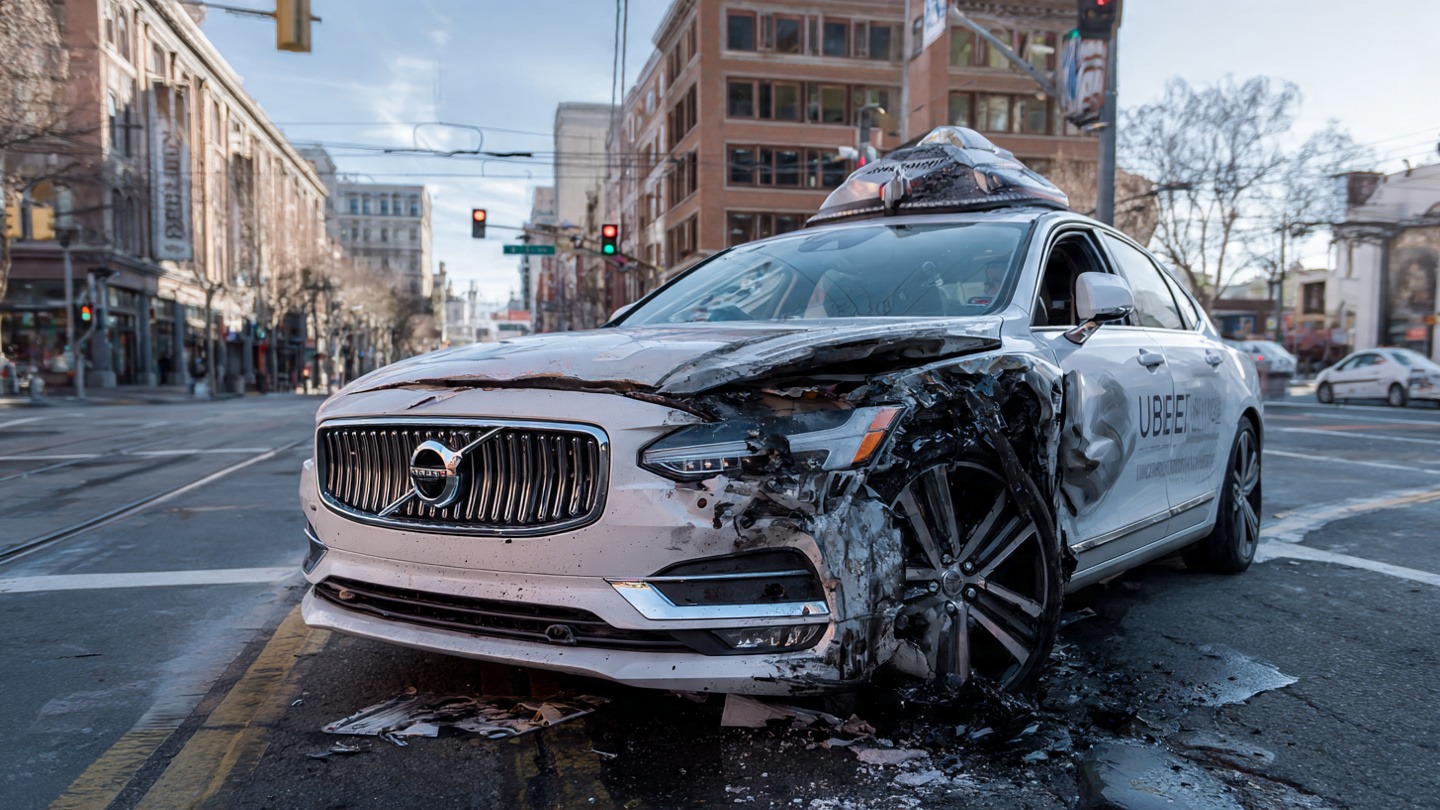
Picture this. A quiet street. A car moving smoothly, no hands on the wheel. Inside, a human sits in the driver’s seat, eyes forward, ready to intervene. Then something unexpected happens. A split second. An impact.
That scenario isn’t science fiction. It’s already happened. And when it does, one question crashes into everything else: who carries the liability when an Uber self-driving car, with a backup driver, causes an accident?
This is where technology, law, insurance, and human behavior collide in a messy, very real way.
Why Uber Needed Backup Drivers in the First Place
Before full autonomy became a buzzword, Uber knew one thing: regulators wouldn’t allow fully driverless cars on public roads right away. So they used backup driver uber accident liability, sometimes called safety operators.
These drivers are trained employees. They sit behind the wheel. They’re supposed to:
- Monitor the road
- Watch the system
- Take control if the software fails
In theory, it’s a safety net. In practice, it blurs responsibility.
When an Accident Happens, Liability Gets Complicated Fast
With traditional rideshare accidents, responsibility usually falls into familiar buckets:
- The driver
- Uber’s insurance
- Another motorist
But with self-driving vehicles, there’s a new player: the autonomous system itself.
When an Uber self-driving car crashes, investigators look at several layers:
- Did the backup driver react appropriately?
- Did the software make a faulty decision?
- Was there a system alert the driver ignored?
- Was Uber negligent in training or oversight?
None of this is hypothetical. Courts and insurers already wrestle with these questions.
The Backup Driver’s Role: Human, But Not Fully in Control
Here’s the strange part. Backup drivers aren’t driving, until suddenly they are expected to.
Studies show that humans supervising automation often suffer from attention drift. When a system works 99% of the time, humans stop expecting failure. Reaction times slow.
If a crash happens and data shows the driver could have intervened, liability may shift toward them. But if the system failed too quickly or without warning, responsibility leans back toward Uber and its technology stack.
This gray area is where lawsuits thrive.
Uber’s Insurance Coverage for Self-Driving Vehicles
Uber carries extensive commercial insurance policies, especially during testing phases.
Typically, coverage includes:
- Primary liability insurance
- Excess coverage for catastrophic damage
- Coverage specifically written for autonomous testing
When an Uber self-driving backup driver causes accident scenarios, Uber’s policy often responds first especially if the driver was on duty and operating under company protocols.
That doesn’t mean Uber automatically accepts fault. Insurance can pay while liability is still contested.
What About Product Liability and Software Fault?
This is where things get truly modern.
If investigators determine the crash resulted from:
- Faulty object detection
- Poor decision-making algorithms
- Software misinterpretation of road conditions
Then liability may extend beyond Uber to:
- Software developers
- Hardware sensor manufacturers
- Autonomous system vendors
This kind of analysis relies heavily on vehicle data logs. Every second is recorded. Every decision timestamped.
You can see how regulators think about these frameworks by reviewing autonomous vehicle policy discussions from organizations like the National Highway Traffic Safety Administration.
Real-World Cases Changed the Conversation
High-profile autonomous vehicle accidents have already reshaped public opinion and legal expectations.
In some cases:
- Backup drivers were charged for inattention
- Companies faced civil liability claims
- Insurance settlements occurred without admission of fault
These incidents forced companies like Uber to pause testing, redesign systems, and rethink how human supervision works.
Trust, once lost, is expensive to rebuild.
Why Insurance Companies Care So Much
Insurers hate uncertainty. Autonomous vehicles bring a lot of it.
Traditional actuarial models rely on historical data. Self-driving tech doesn’t have decades of crash history. So insurers price risk conservatively, and policies are often customized.
Some insurers now treat autonomous vehicle coverage as a blend of:
- Auto insurance
- Professional liability
- Product liability
That hybrid approach reflects how unclear fault lines still are.
For deeper insight into how insurers view automation risk, industry discussions from sources like Insurance Information Institute are often referenced.
Does the Backup Driver Ever Pay Personally?
Usually, no. As long as the driver is:
- Properly trained
- Following company procedures
- Operating within scope of employment
Uber’s corporate insurance typically shields them.
However, extreme negligence like distraction, phone use, or falling asleep can open the door to personal liability or even criminal charges.
That’s rare, but not impossible.
Why This Matters for the Future of Self-Driving Cars
Every accident becomes a precedent. Every lawsuit nudges the legal system closer to clearer rules.
Companies are learning that:
- Human supervision isn’t a perfect solution
- Transparency matters after crashes
- Insurance must evolve alongside technology
Eventually, full autonomy may remove backup drivers entirely. But until then, responsibility will remain shared, debated, and sometimes fought over in court.
FAQs About Uber Self-Driving Backup Driver Accident Liability Insurance
Who is usually liable in these accidents?
Liability depends on whether the human driver, the software, or company procedures caused the crash.
Does Uber have special insurance for self-driving cars?
Yes. Uber carries tailored commercial insurance for autonomous testing and operations.
Can victims sue Uber directly?
Yes, especially if the vehicle was operating under Uber’s autonomous program.
Is the backup driver always at fault?
No. Fault depends on data, reaction time, alerts, and system behavior.
Final Thoughts
The phrase uber self driving backup driver causes accident liability insurance sounds technical, but the issue is deeply human. It’s about trust. Accountability. And how much responsibility we place on people supervising machines that think for themselves.
The law is still catching up. Insurance is adapting on the fly. And every crash pushes the system closer to clarity—or chaos.
For now, responsibility lives in the space between human hands and digital decisions.
