

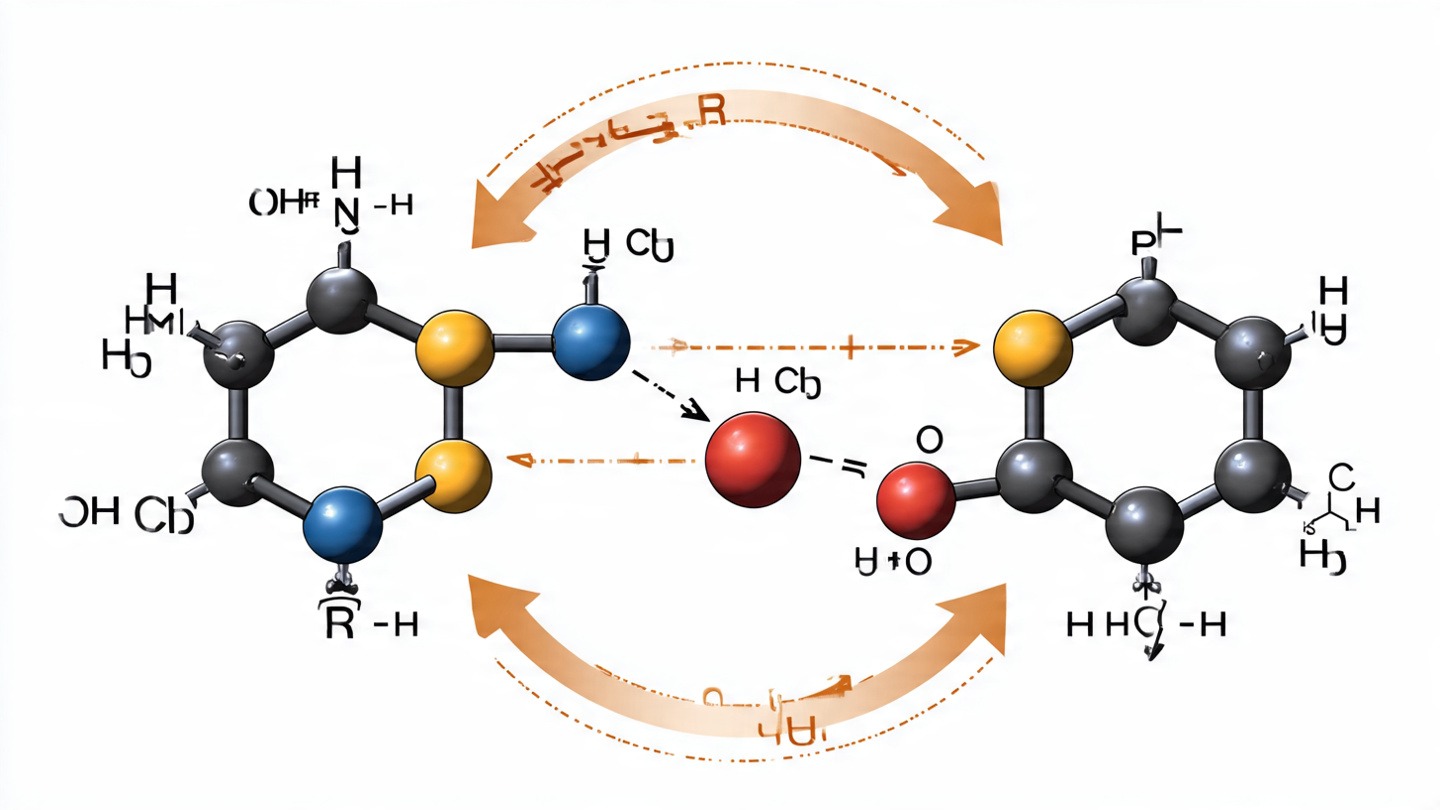
In organic chemistry, the position of a halogen can be moved by performing specific reactions that allow chemists to rearrange, substitute, or eliminate functional groups within a molecule. Understanding how and why this happens is fundamental for students, researchers, and professionals working in pharmaceuticals, materials science, and chemical synthesis.
Halogens—fluorine, chlorine, bromine, and iodine are highly reactive substituents that influence molecular stability, polarity, and reactivity. When chemists aim to relocate a halogen atom from one carbon to another, they typically rely on elimination–addition mechanisms, carbocation rearrangements, or radical pathways.
This in-depth article explores the science behind halogen migration, reaction mechanisms, practical laboratory approaches, and real-world applications all in a clear, structured format.
Understanding Why the Position of a Halogen Can Be Moved by Performing Specific Reactions
Before examining reaction pathways, it’s important to understand why the position of a halogen can be moved by performing targeted chemical transformations.
Halogens are:
- Electronegative atoms
- Strong electron-withdrawing groups
- Good leaving groups in substitution reactions
Because halogens are excellent leaving groups, they participate readily in elimination and substitution reactions. These properties make halogen-containing compounds highly versatile in synthesis.
In many cases, moving a halogen involves:
- Removing it from one carbon
- Generating an intermediate (carbocation, alkene, or radical)
- Reintroducing the halogen at a different position
The Position of a Halogen Can Be Moved by Performing Elimination and Addition Reactions
One of the most common strategies involves elimination followed by re-addition.
Step 1: Elimination (E1 or E2)
A halogen leaves, forming an alkene.
Step 2: Electrophilic Addition
The alkene reacts with a hydrogen halide (HX), placing the halogen at a different carbon based on regioselectivity rules.
This method is widely used in undergraduate organic chemistry labs and industrial synthesis.
Halogen Rearrangement Reactions in Organic Chemistry
Halogen rearrangement reactions in organic chemistry often occur via carbocation intermediates. When a halogen leaves during an E1 reaction, a carbocation may form and undergo rearrangement before reattachment.
Carbocation Rearrangements Include:
- Hydride shifts
- Alkyl shifts
- Ring expansions
These rearrangements lead to more stable carbocations, which then capture halide ions at new positions.
For detailed reaction mechanisms and theoretical foundations, the organic chemistry resources provided by American Chemical Society offer authoritative explanations and peer-reviewed content.
Organic Reactions That Shift Halogen Position: Mechanistic Overview
Organic reactions that shift halogen position generally follow three mechanistic pathways:
1. Substitution Mechanisms (SN1 and SN2)
- SN1 involves carbocation intermediates and possible rearrangements.
- SN2 proceeds in a single step and usually does not allow rearrangement.
2. Elimination–Addition Sequences
An alkene intermediate forms first, followed by halogen reattachment.
3. Radical Mechanisms
Radical halogenation under UV light can reposition halogens along a carbon chain.
Each pathway offers different regioselectivity and stereochemical outcomes.
How to Move a Halogen Atom in a Molecule: Step-by-Step Example
To understand how to move a halogen atom in a molecule, consider 2-bromobutane:
Step 1: Elimination
Treat with a strong base → form butene.
Step 2: Addition
React butene with HBr under controlled conditions.
Depending on conditions:
- Markovnikov addition places bromine at the more substituted carbon.
- Radical conditions (peroxide present) reverse regioselectivity.
This illustrates how strategic reaction planning allows chemists to control halogen placement.
Mechanism for Halogen Migration in Alkanes and Alkenes
The mechanism for halogen migration in alkanes and alkenes depends heavily on reaction conditions.
In Alkanes:
Radical halogenation occurs via:
- Initiation (homolytic bond cleavage)
- Propagation (radical substitution)
- Termination
In Alkenes:
Electrophilic addition often follows Markovnikov’s rule, favoring more stable carbocations.
These mechanisms highlight why reaction control temperature, solvent, light exposure is critical.
Factors That Influence Halogen Position Changes
When analyzing why the position of a halogen can be moved by performing certain reactions, several variables matter:
- Carbocation stability
- Steric hindrance
- Solvent polarity
- Temperature
- Presence of peroxides
For example, polar protic solvents favor SN1 reactions, increasing the likelihood of rearrangements.
Real-World Applications of Halogen Migration
Understanding halogen repositioning isn’t just academic—it has practical value.
Pharmaceutical Industry
Many drugs contain halogen substituents. Adjusting halogen position can:
- Improve drug bioavailability
- Enhance receptor binding
- Reduce toxicity
Agrochemicals
Pesticides often rely on precise halogen placement for effectiveness.
Materials Science
Fluorinated polymers depend on controlled halogen positioning to achieve chemical resistance.
Case Study: Rearrangement in Tertiary Halides
Consider tert-butyl chloride undergoing SN1 substitution:
- Chloride leaves
- Carbocation forms
- Rearrangement stabilizes intermediate
- Nucleophile attacks new position
This demonstrates how molecular stability drives halogen movement.
Common Laboratory Techniques Used
To ensure success when attempting to shift halogen position, chemists use:
- Controlled heating systems
- Inert atmospheres
- UV light sources (for radical reactions)
- Chromatography for product separation
Analytical methods include:
- NMR spectroscopy
- Mass spectrometry
- Infrared spectroscopy
These tools confirm halogen placement post-reaction.
Safety Considerations in Halogen Chemistry
Halogen-containing reagents can be hazardous.
Important precautions:
- Use proper ventilation
- Wear protective equipment
- Handle halogen gases with care
- Follow institutional safety protocols
Laboratory safety standards are outlined in academic guidelines from institutions like American Chemical Society, which provide best practices for chemical handling.
Academic Importance for Students
For chemistry students, mastering halogen repositioning concepts helps in:
- Understanding reaction mechanisms
- Solving synthesis problems
- Preparing for advanced coursework
- Performing well in competitive exams
Many exam questions revolve around predicting final products after elimination–addition sequences.
FAQs About The Position of a Halogen Can Be Moved by Performing Reactions
1. Why does halogen migration occur?
It occurs due to carbocation rearrangements or reaction sequences that remove and re-add halogens at more stable positions.
2. Does SN2 allow halogen rearrangement?
No. SN2 reactions proceed in one step without carbocation intermediates, preventing rearrangement.
3. Can fluorine be moved like chlorine or bromine?
Fluorine forms very strong bonds, making it less reactive and harder to reposition compared to other halogens.
4. What determines where the halogen reattaches?
Regioselectivity rules, carbocation stability, and reaction conditions determine final placement.
5. Are radical reactions predictable?
Radical reactions are less predictable but can be controlled using temperature and initiators.
Conclusion: Mastering Halogen Positioning in Organic Chemistry
The position of a halogen can be moved by performing carefully chosen organic reactions such as elimination–addition sequences, carbocation rearrangements, and radical substitutions. By understanding reaction mechanisms, stability factors, and laboratory techniques, chemists can strategically control halogen placement for academic, industrial, and pharmaceutical applications.
Halogen migration exemplifies how molecular structure and reaction conditions shape chemical outcomes making it a cornerstone concept in organic synthesis.
Call to Action
If you’re studying organic chemistry or working in chemical research, deepen your understanding of reaction mechanisms today. Review elimination and substitution reactions, practice mechanism drawing, and explore advanced synthesis strategies to master halogen positioning.
Read more: Science Experiment Book Standard 8: The Ultimate Guide for Students, Teachers, and Parents
