

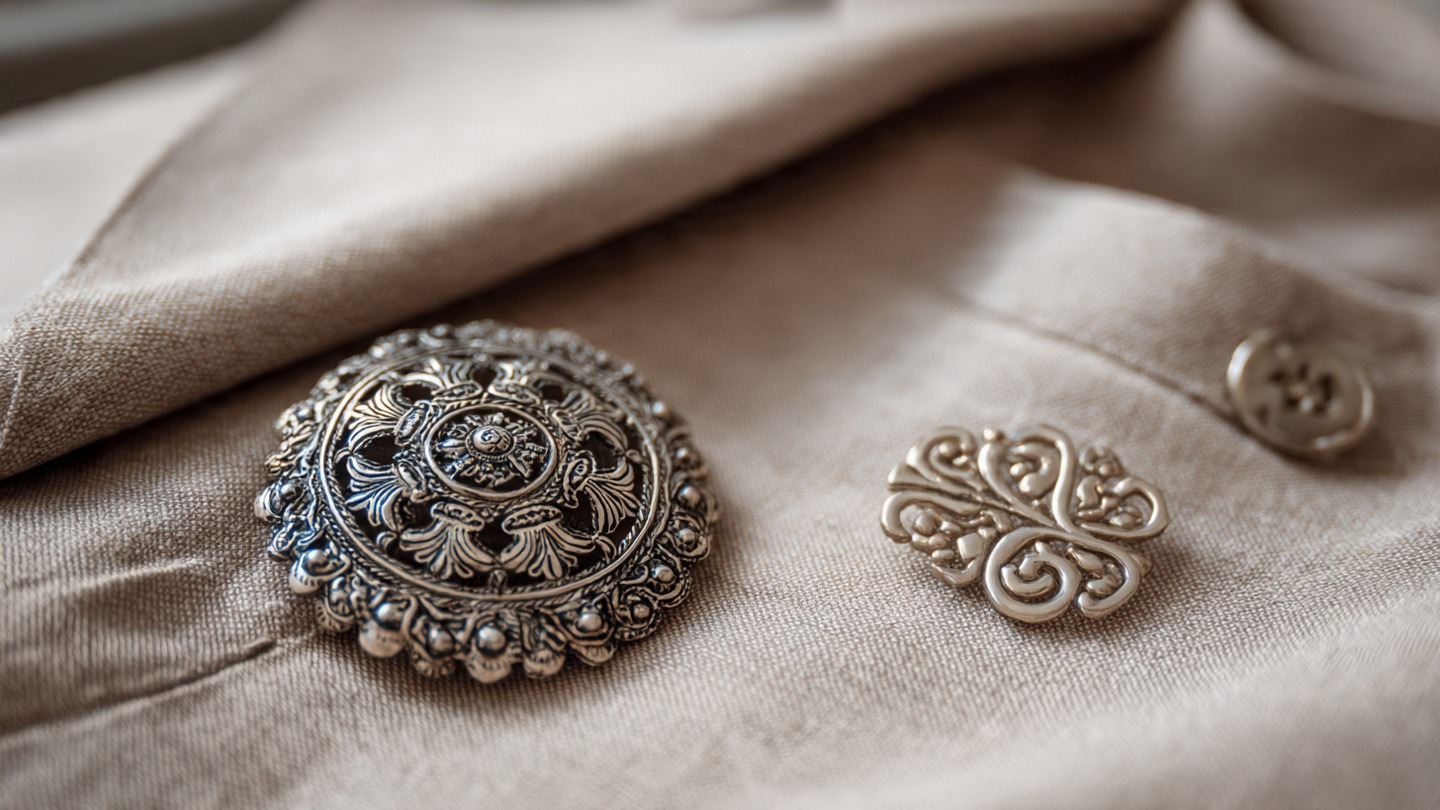
There’s something quietly powerful about sagės.
They’re small. Often overlooked. Pinned neatly to a coat, a scarf, a blazer lapel. But behind that tiny piece of metal or enamel? Centuries of culture, craftsmanship, symbolism… and sometimes even politics.
You might think brooches belong to grandmothers or museum glass cases.
Not quite.
Sagės have survived empires, fashion revolutions, industrialization, minimalism and now they’re stepping back into modern style with surprising confidence.
Where sagės really began
Before buttons. Before zippers. Before modern tailoring.
People needed a way to fasten clothing.
Early sagės similar to Roman fibulae were practical tools. Metal pins used to secure cloaks and garments. But humans don’t leave things plain for long. Decoration followed quickly.
In Baltic regions, especially Lithuania, sagės evolved into intricate bronze and silver pieces worn as both fastening devices and status markers. Archaeologists have discovered elaborate brooches in burial sites dating back over 1,000 years.
Some of these historical designs can be explored through the collections at the National Museum of Lithuania, where traditional Baltic jewelry reflects trade, tribal identity, and craftsmanship that still inspires modern designers.
It’s fascinating these weren’t just accessories. They told you where someone came from. Sometimes even their social rank.
More than decoration: sagės as silent language
Jewelry speaks.
Not loudly. But clearly.
In the 18th and 19th centuries, brooches were deeply personal. Mourning brooches contained woven hair of loved ones. Cameo brooches signaled classical education and taste. Military insignia took brooch form. Political allegiance often did too.
Even in modern times, brooches carry coded meaning.
Queen Elizabeth II was known for carefully choosing brooches during diplomatic visits. Observers often analyzed her selections, suggesting subtle political messages were embedded in those small pins.
That’s the thing about sagės. They don’t shout. They suggest.
Why sagės are quietly trending again
Fashion moves in cycles. But it rarely repeats exactly the same way.
After a long stretch of minimal, barely-there jewelry, people are learning back into expressive accessories. Vintage aesthetics are booming. Secondhand markets are growing. Personal style feels more curated, less uniform.
Sagės fit perfectly into that shift.
They allow individuality without committing to permanent change. You can pin one on a structured blazer for a sharp, modern look. Or on a knitted scarf for something softer. Or cluster several together for something unexpected.
Designers have noticed.
Luxury houses and independent jewelry makers alike have reintroduced brooch-style pieces in recent collections. On runways from Paris to Copenhagen, brooches have appeared on coats, dresses, even handbags.
The global fashion accessories market is projected to surpass $500 billion by 2027, and statement pieces including brooch-style pins are part of that growth. Consumers are investing more in versatile accessories rather than fast-fashion clothing.
And sagės? They’re versatile by nature.
Traditional Baltic sagės vs. modern interpretations
Traditional Baltic sagės
- Often circular or spiral designs
- Crafted from bronze or silver
- Symbolic engravings
- Linked to regional heritage
These pieces were bold. Not delicate. They were meant to be seen.
Contemporary sagės
- Minimal geometric shapes
- Abstract metal structures
- Enamel art pieces
- Mixed materials (wood, resin, recycled metals)
Modern designers blend heritage motifs with clean lines. The result feels rooted yet current.
Interestingly, there’s growing demand among younger buyers for heritage-inspired jewelry. Cultural pride plays a role. So does sustainability vintage and handcrafted pieces are seen as more meaningful than mass-produced accessories.
The emotional factor
Here’s something people don’t talk about enough.
Sagės are often gifted.
They’re small enough to feel intimate. Significant enough to feel special. A brooch passed from grandmother to granddaughter carries weight. It holds memory.
Unlike rings or necklaces, brooches don’t dominate an outfit. They complement it. They can be repositioned. Restyled. Reinvented.
That flexibility makes them deeply personal.
You’re not just wearing a piece of jewelry.
You’re placing it.
That small act feels intentional.
Styling sagės today (without looking outdated)
Some people hesitate because they associate brooches with older fashion. But styling makes all the difference.
Try:
- A single metallic sage pinned to an oversized blazer lapel
- A minimalist silver piece on a black turtleneck
- Multiple small pins clustered on a denim jacket
- A bold artistic brooch on a plain wool coat
It’s less about tradition. More about contrast.
Sharp tailoring + organic brooch.
Casual knitwear + structured metal.
That tension creates modernity.
Investment value: are sagės collectible?
Certain vintage brooches have appreciated significantly in value, especially pieces from established jewelry houses or historically significant eras.
Collectors look for:
- Authentic Baltic tribal designs
- Mid-century designer brooches
- Limited edition artistic pieces
- Precious metals and gemstone settings
The secondary jewelry market has grown steadily, driven by online resale platforms and increasing interest in heritage items.
Small object. Long lifespan.
That combination appeals to collectors.
FAQs
What are sagės?
Sagės are brooches decorative pins traditionally used to fasten garments but now primarily worn as fashion accessories or symbolic jewelry.
Are sagės only traditional or antique?
No. While they have deep historical roots, modern designers reinterpret sagės in minimalist, abstract, and contemporary styles.
How do you wear sagės without looking old-fashioned?
Pair them with modern silhouettes like oversized blazers, structured coats, or minimalist outfits. Keep the contrast sharp and intentional.
Are sagės valuable?
Some are. Antique Baltic sagės and designer brooches can hold or increase in value, especially if crafted from precious metals or linked to historical significance.
Why sagės endure
Trends fade. Accessories rotate in and out of popularity.
But sagės never disappear completely.
They adapt.
From fastening cloaks in ancient Europe to making subtle diplomatic statements in modern royal courts… from Baltic tribal identity to contemporary runway styling… they continue to evolve.
All while remaining small enough to fit in the palm of your hand.
That’s their magic.
Quiet.
Intentional.
Lasting.
