

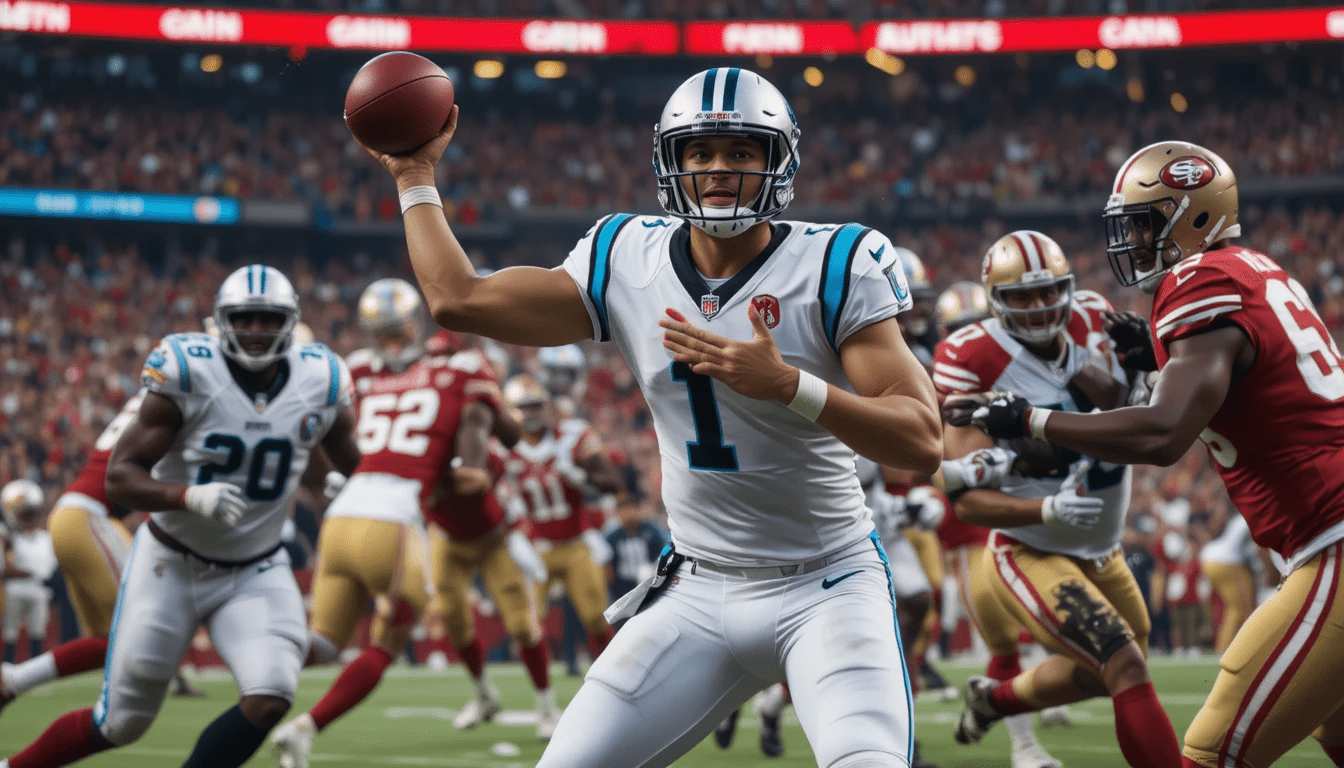
Some games don’t need fireworks to be interesting. They need context. That’s exactly the case when people search for carolina panthers vs 49ers match player stats. On paper, it looks like a simple matchup. On the field, it’s a layered story of execution, pressure, and moments that swing momentum before fans even realize what’s happening.
This matchup usually tells you a lot about where both teams are mentally and physically. The stats? They don’t just record what happened. They explain why it happened.
The Bigger Picture Behind the Box Score
When Carolina and San Francisco meet, the contrast is obvious. The Panthers often come in trying to prove growth, structure, and resilience. The 49ers? They usually arrive with confidence built on system football—sharp play-calling, disciplined defense, and stars who know exactly when to step up.
Looking at player stats from these games is like reading two different philosophies on the same page.
Quarterback Performance: Calm vs Chaos
49ers Quarterback Impact
San Francisco quarterbacks tend to post efficient numbers in this matchup. Completion percentage matters more than flashy yardage here. Short throws. Smart reads. Letting playmakers do the rest.
You’ll often see:
- High completion rates
- Solid yards per attempt
- Few risky throws
That doesn’t scream drama. It whispers control.
Panthers Quarterback Challenges
Carolina quarterbacks, on the other hand, often face pressure early. That shows up fast in the stats. Lower completion rates. More throwaways. Occasionally, a scramble that turns into a first down and keeps hope alive.
It’s not always about talent. It’s about time in the pocket. And against the 49ers, time is expensive.
Running Game: Where the Tone Is Set
49ers Rushing Stats
This is where San Francisco usually shines. Their running backs consistently post strong yards-per-carry numbers against Carolina. Not because of one breakout run—but because of steady, punishing efficiency.
Five yards here. Six there. Suddenly, the defense is tired.
The stats reflect that rhythm:
- Multiple backs contributing
- Consistent first-down conversions
- Red-zone rushing success
Panthers Ground Effort
Carolina’s rushing stats often tell a more emotional story. A few explosive runs. Then stretches of nothing. When the run game clicks, the Panthers look dangerous. When it doesn’t, the stat sheet gets quiet fast.
Wide Receivers and Tight Ends: Who Really Made Noise
49ers Receiving Leaders
The 49ers’ receiving stats usually spread out nicely. No one hogs everything. One receiver leads in yards, another in touchdowns, a tight end sneaks in with key third-down catches.
That balance is deadly—and the numbers show it.
Panthers Pass Catchers
For Carolina, production often leans heavily on one or two names. A top receiver might post strong target volume but average yards per catch. It’s effort-based football, not free-flowing.
Those stats often reflect a team fighting uphill.
Defensive Player Stats That Change the Game
Defense doesn’t always show up loud in fantasy leagues, but it screams in real games.
49ers Defensive Standouts
Against the Panthers, San Francisco defenders usually rack up:
- High pressure rates
- Tackles for loss
- Quarterback hits
Even when sacks aren’t massive, disruption is. That’s why the Panthers’ offensive stats sometimes dip unexpectedly.
Panthers Defensive Resistance
Carolina defenders tend to show heart in the numbers. Solid tackle counts. A linebacker leading the team in stops. A defensive back with a surprise interception.
The stats may not dominate, but they reveal effort.
Turnovers and Discipline: The Quiet Stat Killers
One interception. One fumble. That’s often the separator.
In many carolina panthers vs 49ers match player stats breakdowns, you’ll notice San Francisco protecting the ball better. Fewer penalties. Fewer mistakes.
Carolina? When turnovers happen, they usually come at the worst possible moment right when momentum starts shifting.
For a deeper look at how NFL team efficiency and player metrics are evaluated league-wide, this NFL statistical database offers a broader perspective on how these performances stack up historically.
Special Teams: Small Numbers, Big Influence
Kick returns. Field goal accuracy. Punt coverage.
These stats rarely trend on social media, but they matter. The 49ers often win field position battles. Carolina sometimes has to drive longer fields, and that shows up later in offensive fatigue.
If you’ve ever wondered why two teams with similar yardage totals end up with very different scores—this is usually why.
What These Stats Say About Team Direction
Stats aren’t just history. They’re signals.
San Francisco’s numbers usually point toward stability. System success. Players doing their jobs well enough that no one has to play hero ball.
Carolina’s stats often reflect transition. Learning curves. Individual flashes inside team struggles.
For fans who follow player development closely, this kind of breakdown becomes more meaningful than the final score.
FAQs
Why do Panthers stats often look uneven against the 49ers?
Because San Francisco’s defense forces adjustments early, disrupting Carolina’s original game plan.
Which players usually dominate the stat sheet?
49ers running backs and defensive linemen often stand out. Panthers wide receivers tend to lead their side.
Do stats always reflect effort?
Not always. Some of Carolina’s best efforts don’t translate cleanly into numbers.
Where can fans compare historical matchups?
Reliable sports data platforms and official league records give long-term context.
Final Take
The carolina panthers vs 49ers match player stats tell a story beyond touchdowns and yards. They show structure versus struggle. Efficiency versus adjustment. And most importantly, they reveal where each team truly stands—not where fans hope they are.
That’s why people keep searching for these stats. They’re not just numbers. They’re answers.
